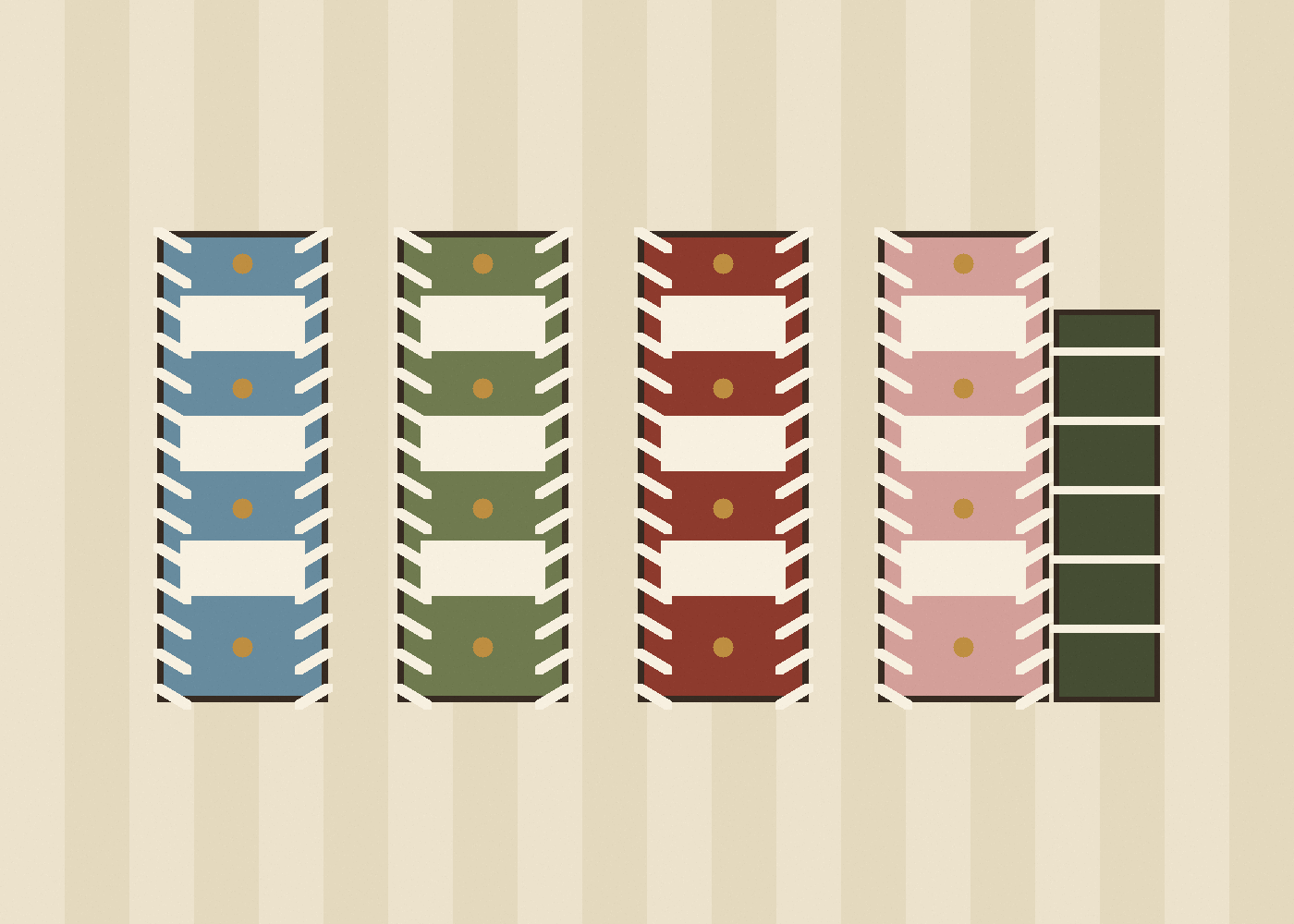
A bedside table is small enough to be overlooked and close enough to be used every day. That makes it a good test for decorative usefulness: the piece has to hold a lamp and book, but it can also carry colour, shape and wit.
Paint is useful here because it can give a modest piece a point of view. A quiet green, oxblood red or washed blue can connect the bed to the rest of the room without demanding that everything match.
Detail to practical use
- Detail: painted, scalloped or patterned bedside tables.
- Design effect: colour, silhouette and storage in a small but visible piece.
- Context: antique, vintage and craft-led pieces can soften a new bedroom.
- Practical use: match height and storage first, then choose the decorative note.
What to notice before buying
- Height first: the table should relate to the mattress and lamp.
- One strong detail is enough: a shaped apron, painted line, drawer pull or useful shelf.
- Colour should connect with the room, not simply provide contrast.
A source edit in development
This first study sets out the criteria for a useful edit. Specific pieces, makers and dealers will be added only when availability, dimensions, delivery details and credits have been checked.
The detail that matters
In an edit like this, the useful question is not simply “is it pretty?” but “what work is this piece doing?” It might bring height to a low bed, introduce painted furniture into a room of timber, or make a plain wall feel more furnished.
Credits and links
- Main image: Studio Elwick visual study.