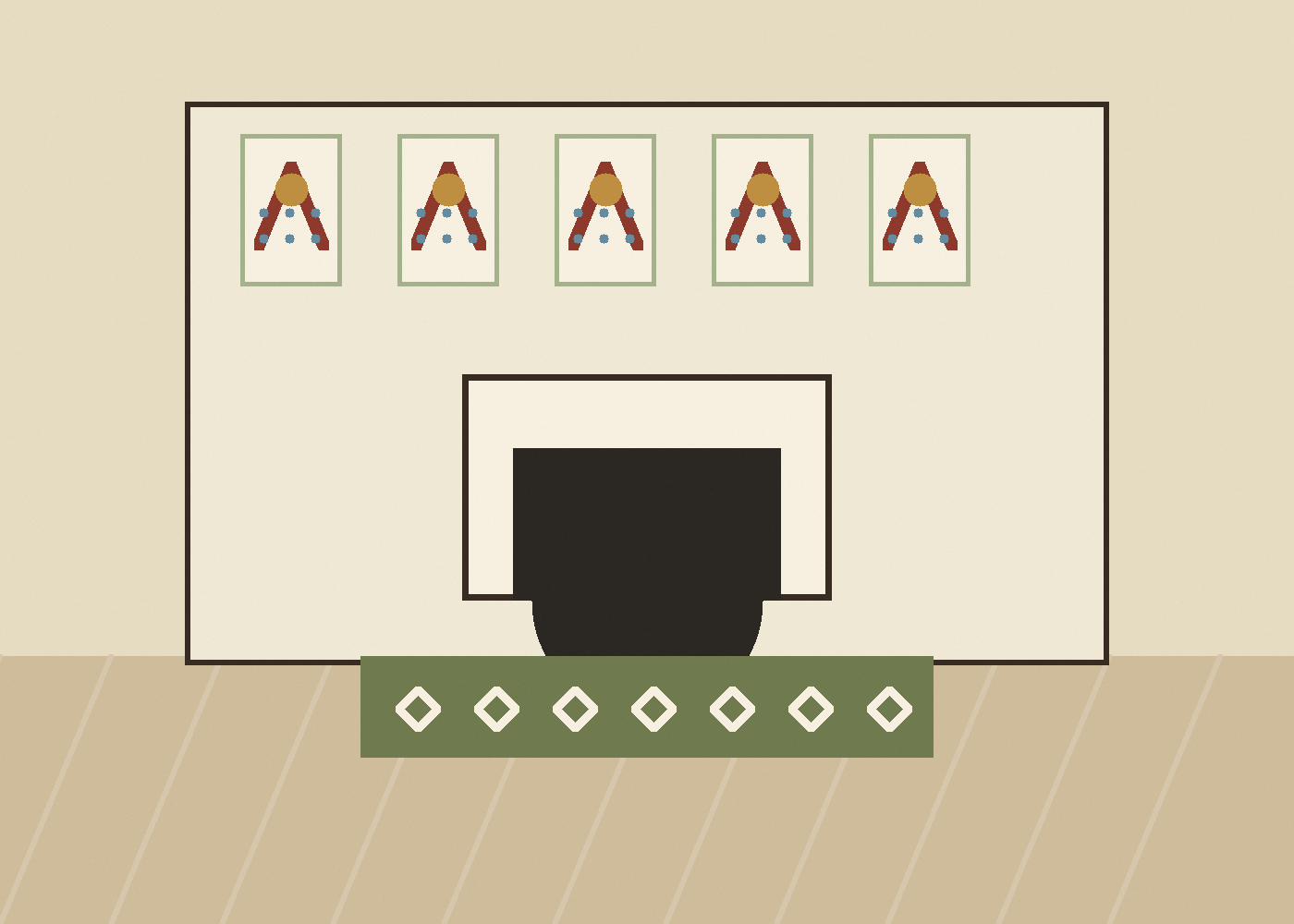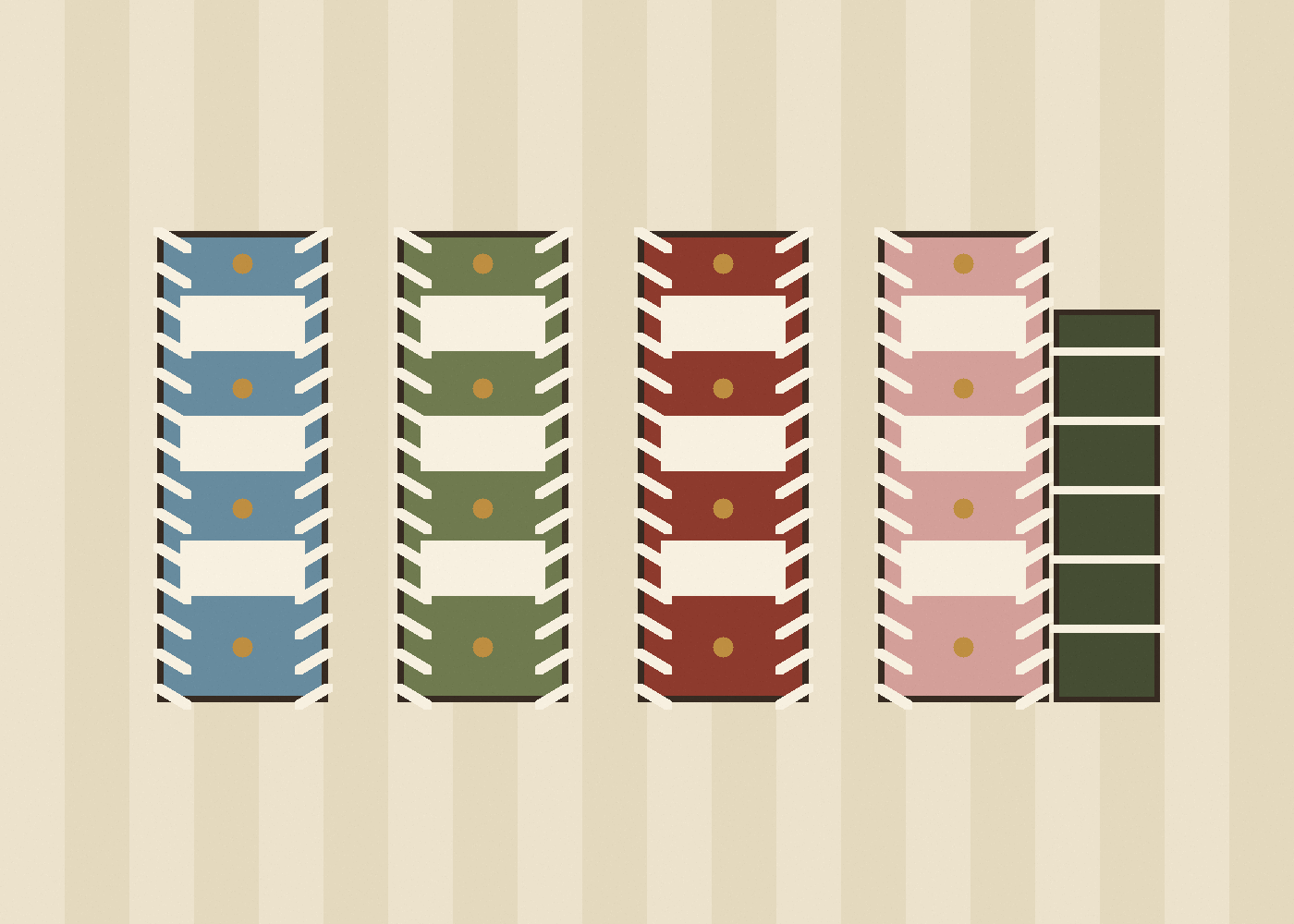
A decorative edge tells the eye where a piece begins and ends. It can be as small as a braid on a cushion, a painted rule around a drawer, a shaped apron or a darker line on the top of a table.
The point is not decoration for its own sake. A good edge gives structure. It makes a practical object feel designed rather than merely present.
A good edge makes a simple object look as though someone cared about where it ended.
Detail to practical use
- Detail: a trim, painted rule, shaped apron or darker line.
- Design effect: clearer outline and a more resolved object.
- Context: furniture, upholstery and craft details that treat edges as structure.
- Practical use: add an edge where a piece already has good bones.
What to notice
- Edges work best when they clarify the shape of the object.
- Contrast trim can make plain fabric feel sharper and more intentional.
- Small painted lines are often enough; the detail does not need to become a motif.
The detail that matters
Look first at furniture that already has good bones: a table with a pleasing leg, a cabinet with proportion, a headboard with a strong outline. The edge should amplify what is already there.
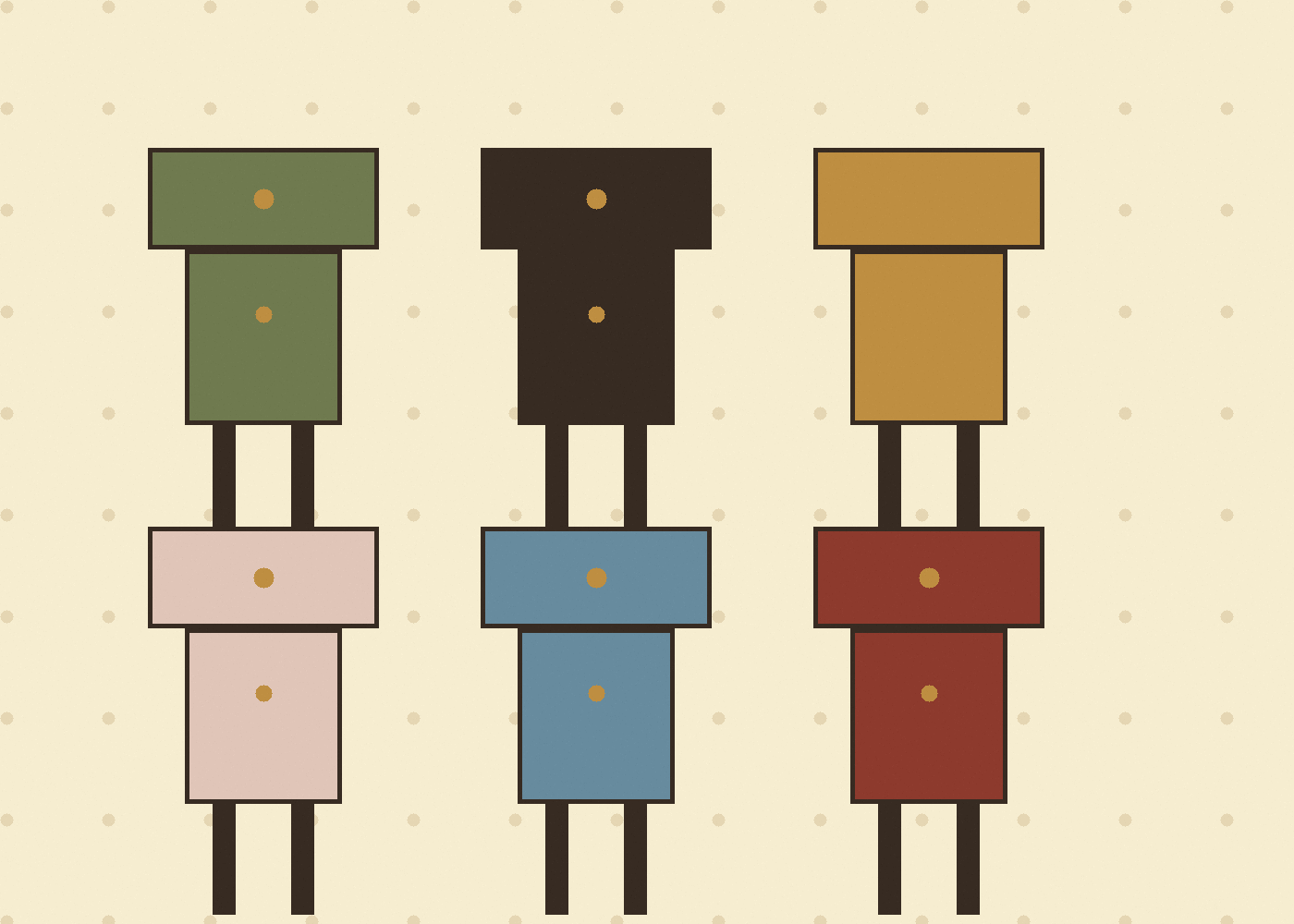
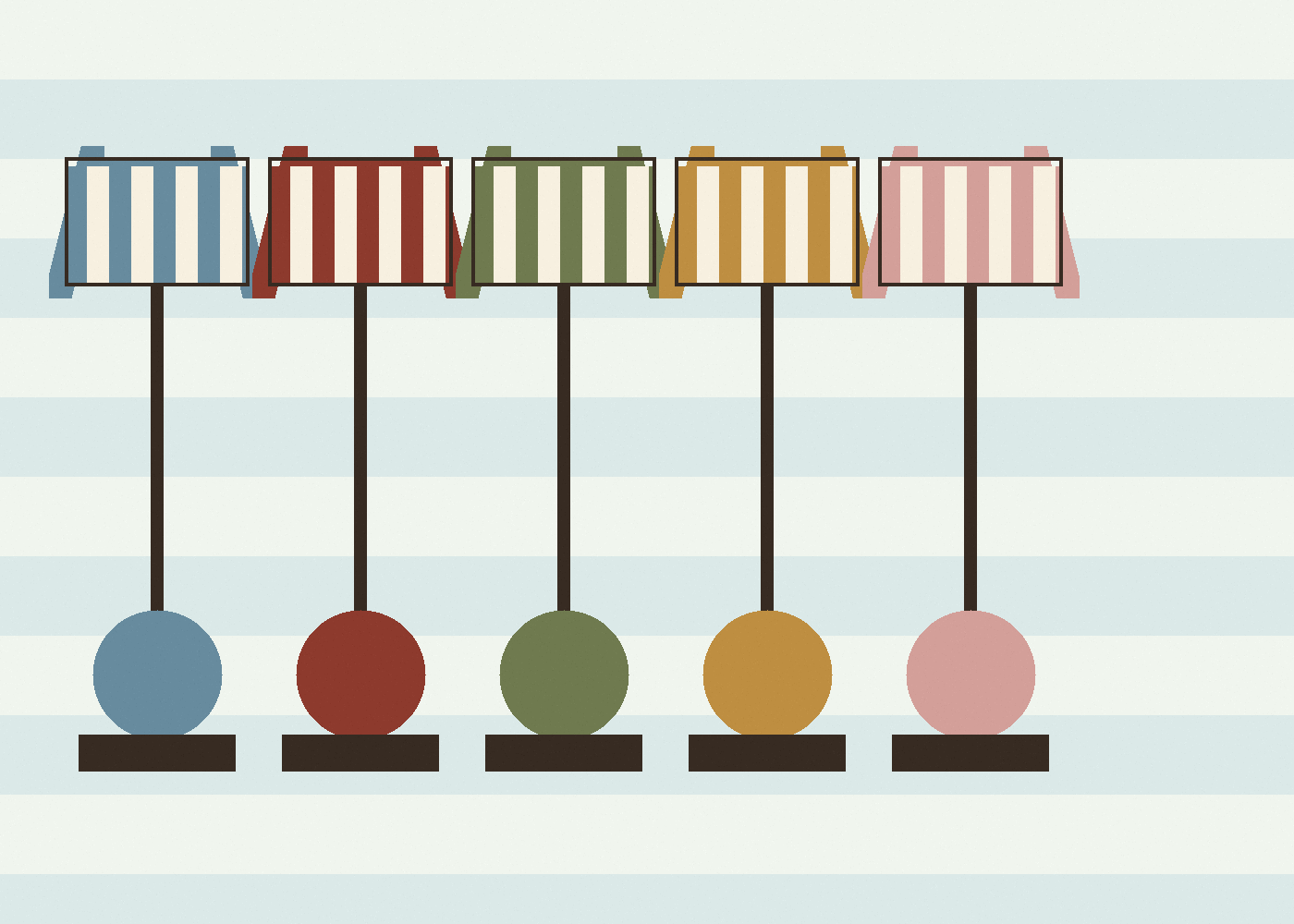
This is also a useful place for future product edits: trims, lampshades, painted furniture, cushions and small makers whose work turns a simple piece into something with presence.
Credits and links
- Main image: Studio Elwick visual study.