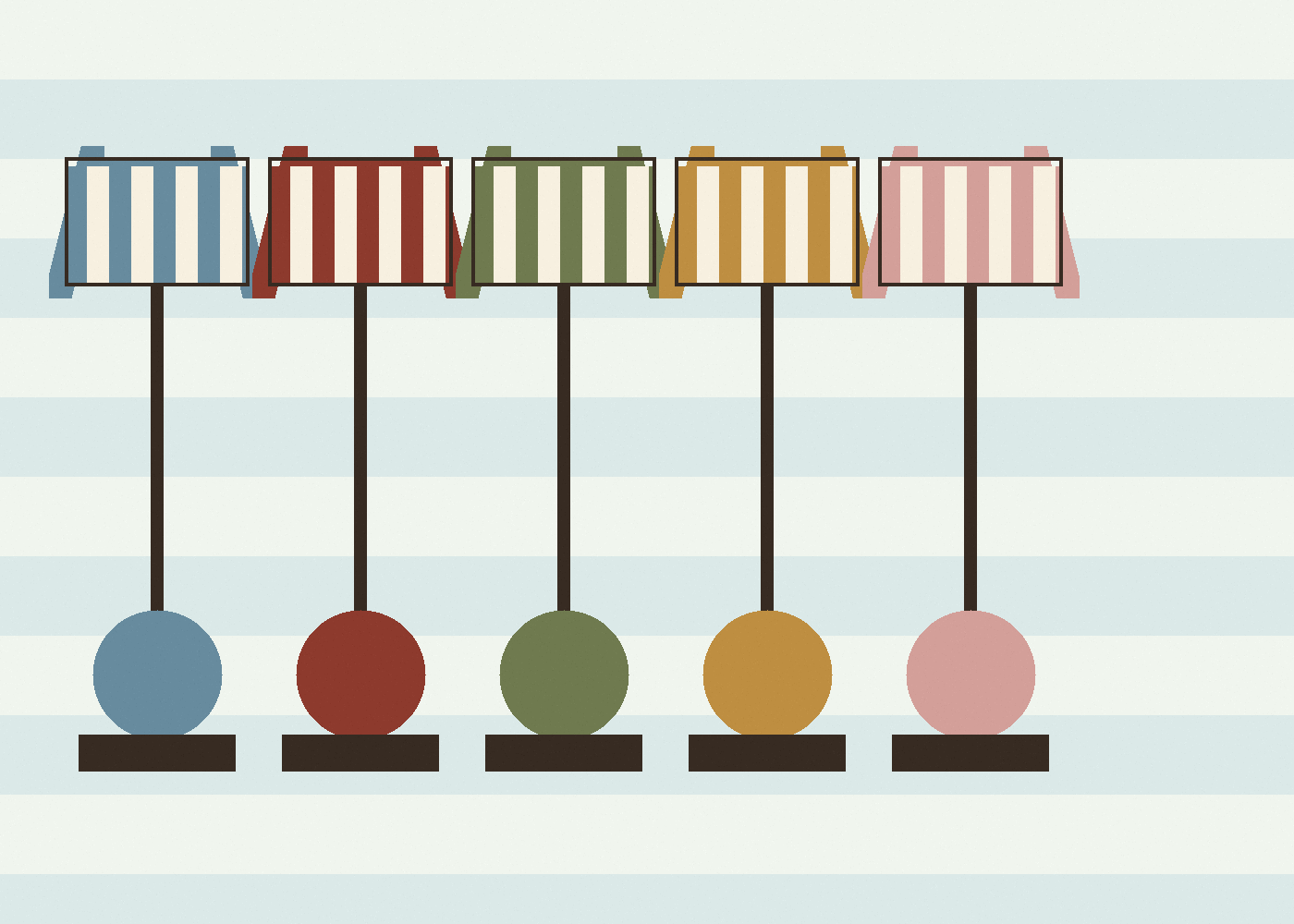
A lampshade is often treated as a finishing touch, but it can change the whole temperature of a room. It sits at eye level, catches light and gives pattern a small, useful surface.
That makes it a good place to use pattern with precision. A tiny repeat can read as texture; a stripe can sharpen a room; a larger motif can make a lamp feel like a decorative object rather than a base with a cap.
Detail to practical use
- Detail: a patterned shade placed at eye level.
- Design effect: rhythm, colour and glow in a small, controlled dose.
- Context: fabric, trim and lamp base need to speak to the wider room.
- Practical use: repeat one colour elsewhere so the shade feels intentional.
What to notice when sourcing
- Scale changes everything: small motifs soften, large motifs declare.
- Trim can make a patterned shade feel finished rather than improvised.
- The shade should relate to something else in the room, even quietly.
The detail that matters
The useful question is how the shade behaves when the lamp is on. Does the colour warm? Does the pattern vanish? Does the trim cast a hard line? Good decorative choices survive use.
Practical takeaway
Start with one lamp rather than a pair if the pattern is strong. For a pair, keep the base simple or repeat the shade fabric elsewhere in a cushion, curtain edge or small upholstered piece.
Credits and links
- Main image: Studio Elwick visual study.